
Structured Cabling Certifications Explained: UL, ETL, GHMT & FORCE
When you source structured cabling, four kinds of documents answer four different questions. A safety listing (such as UL) shows the product is safe to install. Third-party performance verification (such as ETL Verified, GHMT or FORCE) shows the product design meets its performance standard. A Fluke test report shows that one specific cord passed when it was measured. RoHS and REACH declarations show the materials meet EU rules.
By Jason, EXW · Published November 23, 2026 · Updated November 23, 2026
Certification is the topic our customers ask about most. This guide explains what each structured cabling certification proves, what it does not, and which documents EXW can provide.
What certifications should you ask a cabling supplier for?
Ask for four types of document, because each one proves something different. A supplier that holds one type does not automatically hold the others — a UL listing, for example, says nothing about whether a patch cord or keystone jack meets its Category 6A performance limits.
| Document | What it proves | Who issues it | What to ask for |
|---|---|---|---|
| Safety listing (UL) | The product meets a safety standard — for cable, including its fire rating (CM, CMR, CMP) | An OSHA-recognized testing laboratory such as UL | The listing for the exact product and fire rating you are buying |
| Performance verification (GHMT, FORCE, ETL Verified) | The product design meets a performance standard such as ANSI/TIA-568.2-E or ISO/IEC 11801-1 | An independent test laboratory | The certificate, the standard and its edition, and the products covered |
| Test report (Fluke) | One specific cord passed when it was measured | The manufacturer, using a calibrated tester | Reports for the cords in your order, plus the tester's calibration certificate |
| Material compliance (RoHS, REACH) | Restricted substances are within EU limits | The manufacturer's declaration | Declarations for your part numbers |
Is ETL the same as UL?
No. In structured cabling, the two names usually stand for different things. UL is best known for safety: a UL Listed product has been tested to safety standards — for cable, that includes the fire rating (CM, CMR, CMP) that building codes require. ETL is best known for ETL Verified, Intertek's verification of transmission performance to standards such as ANSI/TIA-568.2. EXW's own certificates follow the same split: our UL certificate is a safety listing, and our ETL certificate is ETL Verified.
There is one overlap to know about. Intertek also issues ETL Listed, a safety mark. UL LLC and Intertek Testing Services NA, Inc. are both on OSHA's list of Nationally Recognized Testing Laboratories, so an ETL Listed CMR cable meets the same safety standard as a UL Listed one. EXW's ETL certificate is ETL Verified, not ETL Listed; for safety, we hold UL certification. When a supplier sends a UL or ETL certificate, check whether it is a safety listing or a performance verification, and that it covers the exact product and fire rating you are buying.

What is the difference between CM, CMR, CMP and LSZH?
They are fire ratings, and the space where the cable is installed decides which one you need. In North America, CMP is for air-handling spaces, CMR for vertical runs between floors, and CM for general use within one floor. LSZH (low smoke, zero halogen) takes a different approach, common in Europe: it limits smoke and corrosive gas, not only flame spread. A higher North American rating can replace a lower one: CMP cable can be used where CMR or CM is required. It does not work the other way — CMR cable cannot be installed in a plenum space. The fire test behind each rating is listed in the table further down this page.

Which third-party certifications has EXW obtained?
EXW's keystone jacks and patch cords have been verified to ANSI/TIA-568.2-E:2024 by FORCE Technology, and specific patch cords have also been verified by Intertek (ETL Verified) and GHMT. The FORCE certificates for our keystone jacks and Cat.6A screened patch cords also verify IEC 60512-99-002:2022 — unmating connectors under electrical load of up to 2 A per conductor — which matters when four-pair PoE is running through the connection. EXW also holds UL certifications — safety, not performance verification — for communications cable rated CM, CMR and CMP (UL 444), and for patch cords, field-termination plugs and keystone jacks (UL 1863, with CSA C22.2 No. 182.4 for Canada). The LSZH cable in our LSZH patch cords has been tested to IEC 60332-1-2 (flame propagation for a single cable) and IEC 61034-2 (smoke density). Our quality management system is ISO 9001 certified. The products and standards covered by each certificate are listed in the table further down this page.
What do RoHS and REACH require for EU projects?
RoHS limits ten hazardous substances in electrical and electronic equipment sold in the EU. REACH requires suppliers to disclose any Substance of Very High Concern present above 0.1% by weight. For both, ask for declarations tied to the part numbers you are buying, not a generic company statement. EXW's Certificates page includes RoHS and REACH documentation for our modular plugs, and declarations for other part numbers are available on request. If the cable will be permanently installed in a building in the EU, also ask for its Construction Products Regulation (CPR) class under EN 50575 and the Declaration of Performance.

What does a Fluke test report show — and what doesn't it?
A Fluke test report is a measurement record for one specific cord. It shows whether that cord passed a selected limit — for example a TIA Category 6A patch cord limit — on parameters such as NEXT, return loss and insertion loss, and by what margin. It does not certify the product design; that is what third-party verification is for. At EXW, every Cat.6 and Cat.6A patch cord is 100% Fluke tested to the component limit by default, with a Fluke report for each cord — you do not need to ask for it. We run 42 Fluke test sets for this. If cost is a priority, tell us at the quotation stage, and we can adjust testing to your requirement, for example testing in the channel configuration you specify. Reports are delivered the way you prefer: one report per cord, packed with the product, or matched by PO number and serial number — each cord's serial number is printed on its product label and bag label, and we send the test report for every serial number on your order. Each serial number also traces back to the material lots and production batch the cord was made from. Keystone jacks are sample-tested on Fluke testers in a two-connector permanent link (PL2). One Cat.6A shielded keystone jack, 3J01-A01-00031, is different: we test every unit for return loss and NEXT on test equipment developed in our own factory.

Can OEM and private-label customers use EXW's certifications?
Yes. For OEM and private-label programs, we can arrange multiple listings of our UL, FORCE, GHMT and ETL certifications under your company name, so the certificates carry your brand while covering the same products. The listing fees are quoted to you directly by each certification body (UL, FORCE, GHMT or Intertek). Tell us your part numbers early: listings are tied to specific products and manufacturing sites, so the documents need to be arranged before your first shipment.
Which fire test applies to each cable rating?
| Rating | Where it is used | Fire test |
|---|---|---|
| CMP (plenum) | Air-handling spaces, such as ceilings used for air return | NFPA 262 |
| CMR (riser) | Vertical shafts between floors | UL 1666 |
| CM (general purpose) | Horizontal runs within one floor | UL 1685 (vertical tray) |
| LSZH | Enclosed public spaces, data centers, transport | IEC 60332 (flame), IEC 61034 (smoke), IEC 60754 (halogen gas) |
Which EXW products are third-party verified, and to which standards?
| Product | Verified by | Standard |
|---|---|---|
| Cat.6A screened keystone jacks, 3J01-A01-00203 to -00206 | FORCE Technology | ANSI/TIA-568.2-E:2024; ISO/IEC 11801-1:2017 and 11801-2:2017; EN 50173-1:2018 and 50173-2:2018; IEC 60603-7-51:2010; IEC 60512-99-002:2022 (4PPoE unmating under load, up to 2 A per conductor) |
| Cat.6A screened keystone jacks, 3J01-A01-00207 to -00210 | FORCE Technology | ANSI/TIA-568.2-E:2024; ISO/IEC 11801-1:2017 and 11801-2:2017; EN 50173-1:2018 and 50173-2:2018; IEC 60603-7-51:2010; IEC 60512-99-002:2022 |
| Unscreened (UTP) keystone jacks, 3J01-A01-00041 and -00052 | FORCE Technology | ANSI/TIA-568.2-E:2024; IEC 60512-99-002:2022 |
| Cat.6A screened patch cords, 6ASS-AABBBBYYY-XX | FORCE Technology | ANSI/TIA-568.2-E:2024; ISO/IEC 11801-1:2017 and 11801-2:2017; EN 50173-1:2018 and 50173-2:2018; IEC 61935-2:2022; IEC 60512-99-002:2022 (4PPoE unmating under load, up to 2 A per conductor) |
| Cat.6A 26AWG LSZH S/FTP patch cords, 6ASS-AABBBBYYY-LS | Intertek (ETL Verified) | ANSI/TIA-568.2-E; ISO/IEC 11801-1 Category 6A |
| Cat.8 26AWG patch cords (2 m), tested with a 24 m Cat.8 22AWG link | GHMT | ISO/IEC 11801-1:2017; DIN EN 50173-1:2018 |
Copies of these certificates, and our Fluke tester's calibration certificate, are on our Certificates page, and we can send them for your specific part numbers.
How can I get EXW's certificates and test reports?
- Send us your part numbers and the documents you need — certificates, RoHS/REACH declarations or test reports.
- Tell us how you want Fluke reports delivered: one per cord, or matched by PO number and serial number. If cost is a priority, tell us at the same time.
- Contact us through our inquiry page.
Frequently asked questions
Is an ETL Listed product accepted the same way as a UL Listed one?
Yes. Both are safety listings, and UL LLC and Intertek (ETL) are both OSHA-recognized testing laboratories. Check that the listing covers the exact product and fire rating you are buying, and check your project specification, because some specifications name a particular laboratory.
Is every patch cord Fluke tested?
Yes — every Cat.6 and Cat.6A patch cord is 100% component tested by default; no separate request is needed. If cost is a priority, tell us at the quotation stage and we can adjust testing to your requirement.
Can I get the test report for one specific cord?
Yes. Send us your PO number and the serial number from the cord's label or bag label, and we will send the matching report.
Is third-party verification the same as a test report?
No. Third-party verification covers the product design against a standard. A test report records how one individual unit measured.
Can CMR cable be used where CMP is required?
No. A higher rating can replace a lower one — CMP can be used in riser or general spaces — but CMR cannot be used in plenum spaces.
EXW has manufactured structured cabling products since 1985. If your project needs specific certificates or test reports, send us your part numbers and we will tell you exactly which documents cover them — for our copper cabling and fiber optic ranges, and our quality assurance process.
- Related Products
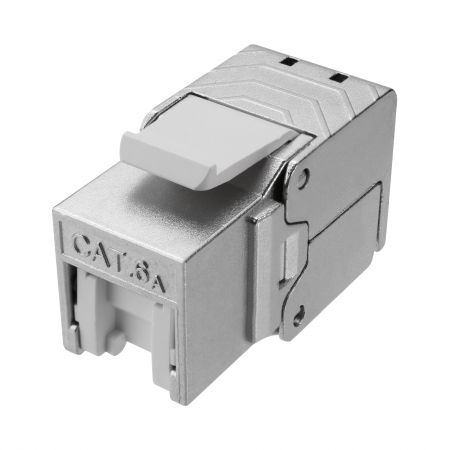
Cat.6A STP 180 Degree Toolless Keystone Jack
CAT6A shielded 4PPoE keystone jack is FORCE certified, and the RJ45 keystone jack is compliant...
Details Add to List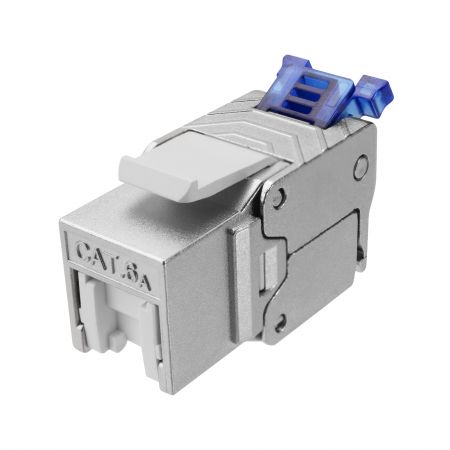
Cat.6A STP 180 Degree Toolless Keystone Jack With Cable Clamp
FORCE certified 4PPoE keystone jack is space-saving and compact for limited space. The Toolless...
Details Add to List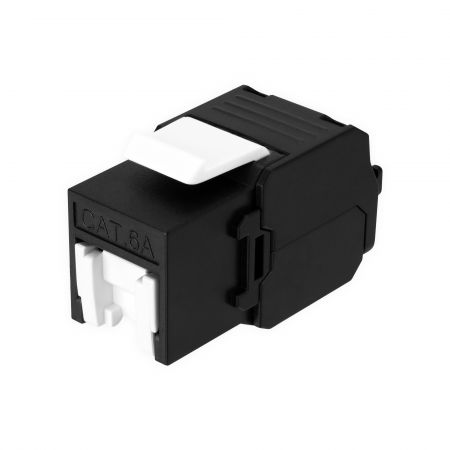
Cat.6A UTP 180 Degree Toolless Keystone Jack With Shutter, Black
ETL certified and FORCE verified unshielded 4PPoE keystone jack is a high-quality RJ45 female...
Details Add to List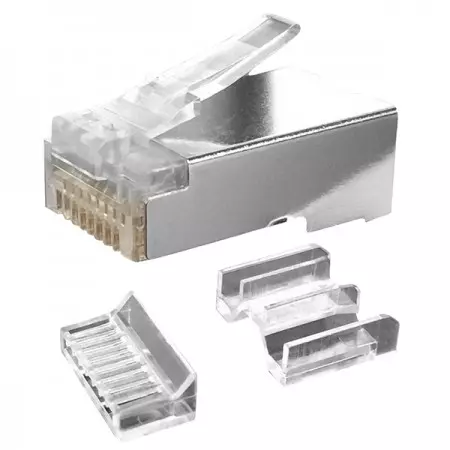
Cat.6A STP Staggered Modular Plug With Load Bar (6 Up 2 Down)
The category 6A three-piece connector can terminate with both stranded and solid cables. The smart...
Details Add to List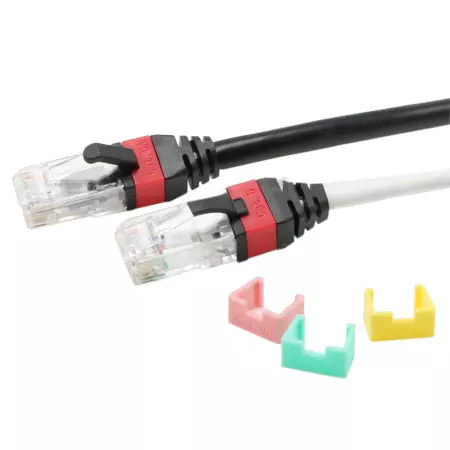
Cat.6A UTP 24 AWG or U/FTP 26 AWG Patch Cord With Changeable Color-Coding Clips
The UL certified and FORCE verified patch cord comes in 7 standard colors, and the customized...
Details Add to List- Related FAQ
We verify our 4PPoE patch cords through Fluke DSX cable analyzer and Fluke LinkIQ cable network analyzer, ensuring the transmission performance and electrical resistance standards for PoE applications....
Read moreThe quality of each keystone jack, cable, and patch cord is an essential factor that can affect the transmission performance of the channel. So, we test each of our Category 6A Component Level Keystone...
Read moreWe measure the PS ANEXT and PS AACR-F values of our Cat6A U/UTP solution using the Fluke DSX CableAnalyzer to assess alien crosstalk (AXT), which can degrade overall channel performance. The 6 around 1 test...
Read more